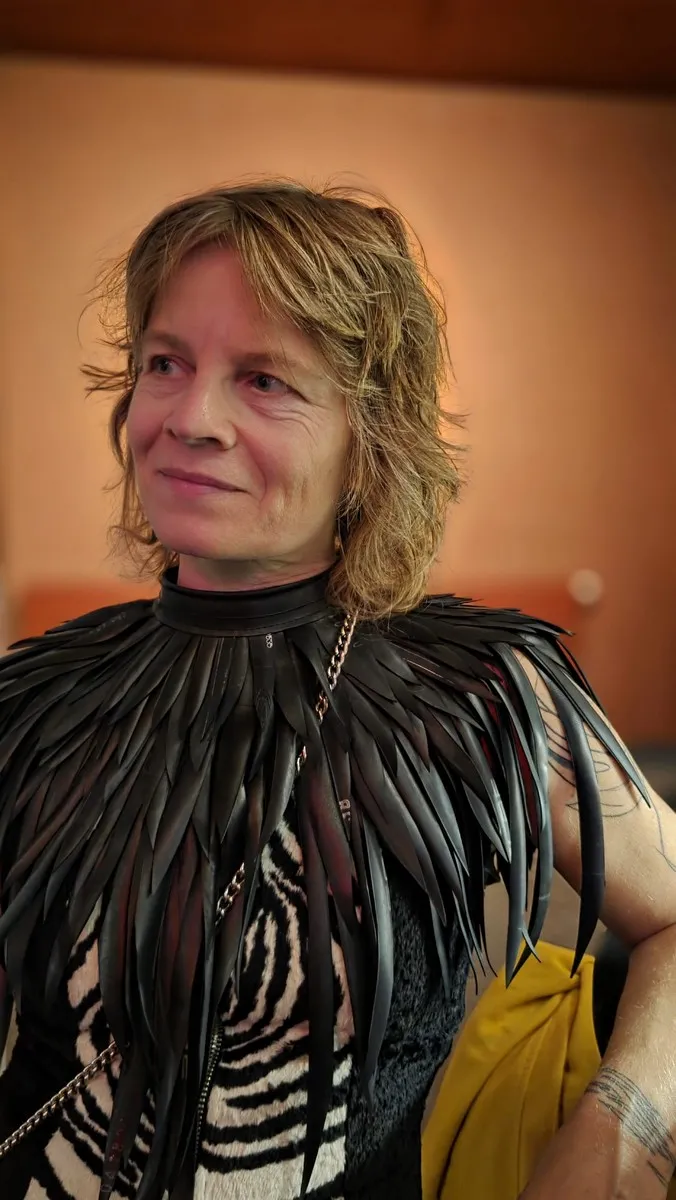
I've been working with discarded bicycle inner tubes for a few years now. What started with making simple floggers has evolved into complex designs: leather-like clothing, feather-shaped capes, collars, harnesses and much more.
Along the way, I've noticed something interesting. Whenever I develop a new technique or design, I often discover that another maker has arrived at a surprisingly similar idea.
Floggers: different makers, similar techniques
Many people make what I would call basic inner tube floggers: rubber strands bundled together and secured with a simple knot.
I started with these too. Then I spent many hours experimenting and researching ways to make my floggers more distinctive and more beautiful. I eventually began using techniques from leatherwork, including the diamond wrap and Turkish head knots, which are also used to finish leather flogger handles.
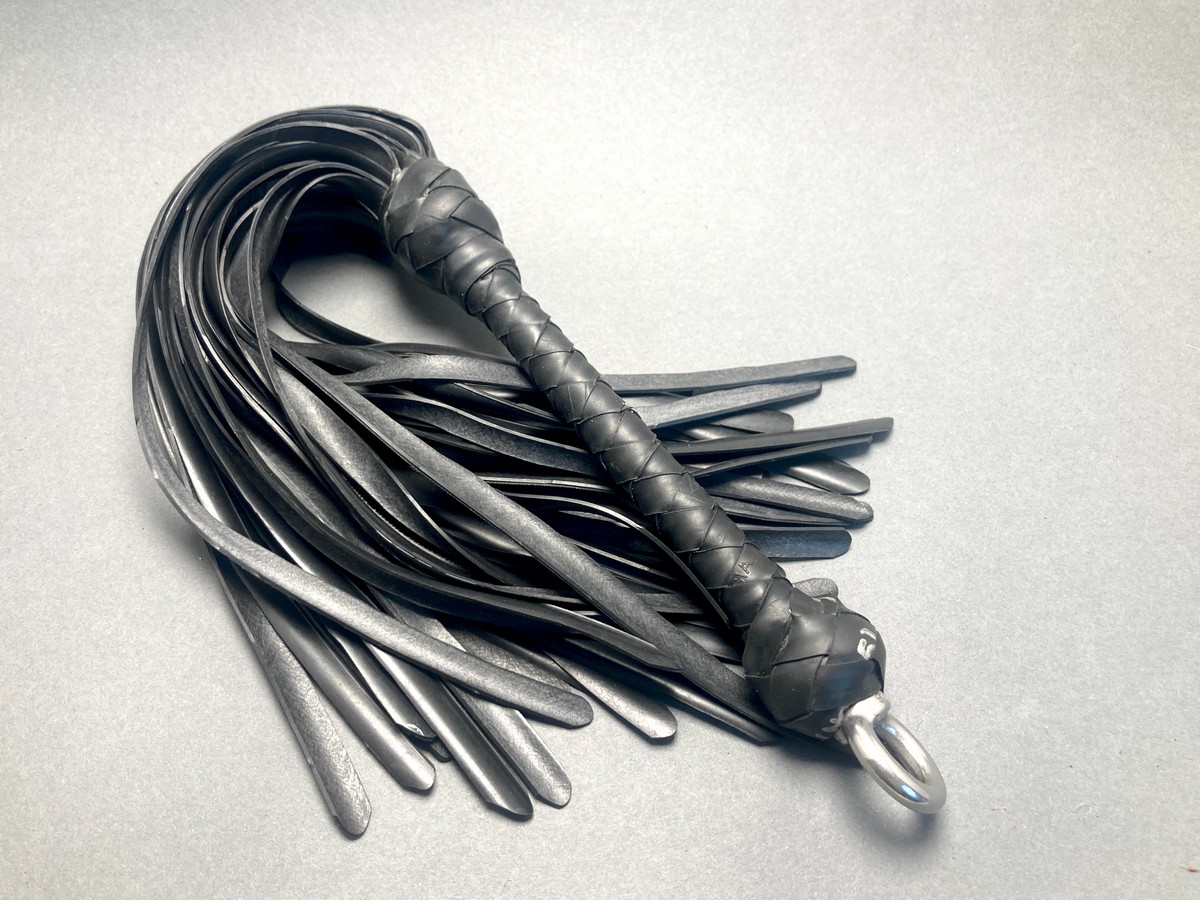
The result was something different from the basic flogger: a braided handle with a more elaborate finish. I love it that the finished pieces are quite often mistaken for leather floggers.
For a while, I thought I was the only one making these kinds of signature braided floggers from bicycle inner tubes. Then I discovered KINKY Sundays in Australia, followed by RubberBeMine, another designer creating floggers using very similar techniques. Both make impressive pieces from the same material, as well as other designs.
I hadn't known about their work when I developed my own approach. It was a reminder that different makers can arrive at similar solutions, even when they work independently.
Belts, harnesses and rubber fabric
Belts, chokers, harnesses and wristbands are another natural direction to explore when working with inner tubes.
The material lends itself to making belts of different widths. Some inner tubes are relatively narrow, while others are wider, depending on the type of bicycle they were made for. Flattening and stitching the rubber can create a simple belt; from there, it's possible to develop all kinds of harnesses and accessories.
Many of these shapes already exist in leather design, so it isn't surprising that similar forms appear in upcycled rubber fashion too.
I also thought I had found something unusual when I started sewing pieces of inner tubes together to create a kind of rubber fabric. I cut patterns from it and sew them into skirts, tops and other clothing. But, once again, I discovered that other makers had explored similar approaches before me.
From rubber strips to feathers
Then there are the fringes and feathers.
Bicycle inner tubes have a slightly curved shape, so cutting them into strips takes some precision work. Tubes have printed lines that help guide the cutting. It's therefore quite natural to cut tubes into strings with straight, diagonal, pointed or rounded ends.
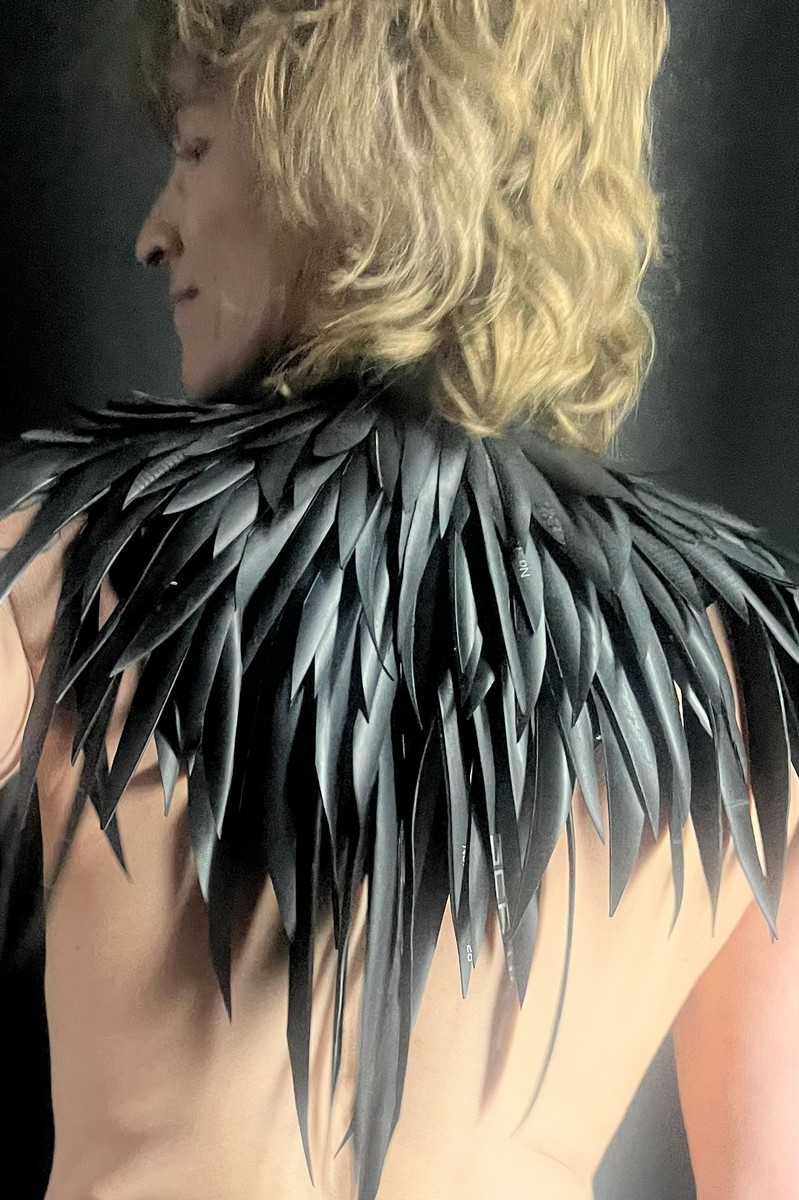
Layer these strips and sew them onto a base, creates volume, movement and texture. It's not surprising that several makers have developed fringe skirts and collars using similar techniques, even though their finished designs can look quite different.
The same goes for feather-like shapes. I've seen other designers, such as Nikita Nikinga create amazing feathered pieces from inner tubes, including capes and skirts. I've made my own versions too, such as the Raven Feather Cape and the Crow Vest.
These discoveries have made me think about how easily similar ideas can emerge when different people experiment with the same material.
Why am I writing about this?
The community of designers working with reclaimed bicycle inner tubes is still relatively small, although it is growing. I suspect we'll continue to see fringes, feathers, harnesses and leather-like clothing emerge from this material.
Part of the reason is practical: the material has certain properties, and those properties open up some possibilities while making others more difficult. We often encounter the same challenges and end up exploring similar solutions. How do you make a feather cape look fuller? How do you create a strong, neatly finished handle? How do you turn a flexible inner tube into a structured garment?
Some of us - like me - deliberately use rubber to create a leather-like or feather-like appearance and thus, a vegan alternative. Others may be interested in different aesthetics, techniques or ideas. We all have our own motivations, but the material itself gives us a shared starting point.
What makes a design your own?
I try to give every piece I make its own character and to develop a recognisable Rubber Bear style. I can recognise my own work through the construction, finishing techniques, proportions and details.
But I also understand that these distinctions aren't always obvious to customers. If two designers use the same material to create feather-like fringes, for example, their work may look similar at first glance, even when the construction and details differ.
The world of inner tube fashion is also tiny compared with the world of leather design. There are countless leather chest harnesses, belts and collars with similar shapes and functions. We generally accept that different makers will create variations on these familiar designs.
Perhaps similarities stand out more in our community simply because there are fewer of us working with this unusual material.
More makers, more possibilities
I'm sure I'll discover more inner tube designs that resemble my own in the future. And I'm fine with that.
If you want to experiment with your own braided flogger or make something from reclaimed bicycle inner tubes, go ahead. That's partly why I share making and tutorial videos on Instagram: I enjoy the techniques and want to show what can be done with a material that might otherwise be thrown away.
I don't think the market has to become saturated or confusing just because several designers work with similar ideas. There is room for different interpretations, techniques and personal styles.
I'll continue developing my designs, experimenting with new techniques and making limited runs of some of my more distinctive pieces. And yes, you might walk into KitKat one night and see someone wearing a feathered rubber piece that wasn't made by me.
That's part of being in a small, creative community. What matters to me is continuing to develop my own work, respecting the creativity of other makers and seeing how many different things we can create from the same discarded material.
One material. Many makers. Many different possibilities.
If you'd like to know more about how I make my pieces, you can explore my work and tutorial videos on instagram and this website.